


At Sports Connect, mental health and wellbeing are at the heart of everything we do, not just for our young people, but for our staff, families, and communities too.
We sat down with William Lee, Director at Sports Connect and Sports Community CIC, to talk about his journey, why mental health awareness is so important, and how we can all play a part in challenging the stigma, both inside and outside of sport.
Q: What do you think are the biggest barriers when it comes to mental health, particularly for men?
The biggest challenge is still the stigma – especially around asking for help.
Even though we’re seeing more conversations and openness, there’s still that classic exchange:
“How are you?”
“Yeah, I’m fine.”
“You?”
“Yeah, all good.”
And then you move on. But the truth is, a lot of people aren’t fine.
There’s still a fear of vulnerability, particularly among men. The real change needs to come from both sides, people feeling comfortable enough to say “I’m not okay,” and others being confident to listen, support, and signpost where needed.
Q: You’ve spoken before about “awareness” being a key word for you. Can you tell us more about that?
Yes , it actually came from a conversation I had about five years ago with Ash Lawrence, who was helping me with mindset coaching. The first thing he said to me was “awareness.”
It really stuck with me. I wrote it on a post-it note and stuck it on the wall in my home office. Awareness has become the foundation of how I manage my own wellbeing. Recognising when my behaviours, mood or energy levels change helps me know when to slow down or reset.
I’m not perfect at it, but I’ve learned to spot the signs, and I’ve built a little toolkit to help me stay grounded.
I hit rock bottom, the very lowest you can be and I promised myself that if I got back towards being on that journey, I owed it to my family to take action as I know for me it is a quick trajectory. Everything is 0 – 100, which does have its positives. Feeling completely worthless, a failure and that I had let the whole world down. I knew how fortunate I was that I had my family to re channel my energy and reprioritise my life. I was a father and a husband and sometimes these words and titles in themselves can set pressures and expectations on us of “what we should be”. The men don’t cry is a very emotional topic and I listened to a very opening podcast on that recently from elite sport. I am aware that if I cry, there is a trigger for that. I try to explore the reason and sometimes it has just come from an absolute week or month of high emotion and adrenaline. These aren’t always negative either but the identification and justification to myself is owed.
Awareness of thinking patterns is also key. The thoughts v Facts topic is very prominent. Intrusive thoughts are part of an illness, which is a fact. The thoughts you have as part of the illness are just that….thoughts…. don’t let thoughts define or control you.
Q: What does that toolkit look like day-to-day?
I start my day early, around 5:30am. That quiet hour before the world wakes up is my time to think, reflect, and get ready mentally for the day ahead.
I’ll spend time meditating, planning my priorities, and checking in with myself. I also set “worry time” – which means if something is on my mind, I’ll schedule time to think about it properly rather than letting it spiral.
And just as importantly, I make sure I build in small, personal moments, doing the school run, taking my son to football, going to CALM Club, or spending time with family.
It’s all about balance. Work is important, but you have to make space for the things that make you you.
Q: You mentioned CALM Club – can you tell us more about that and why it’s so important?
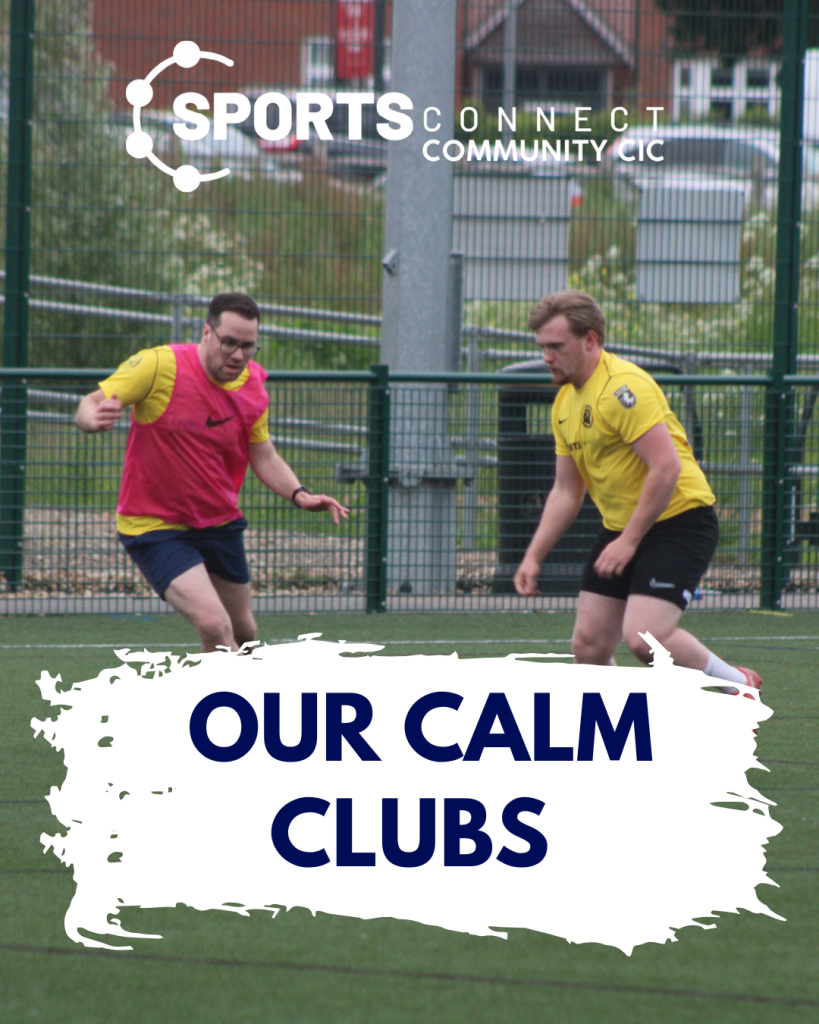
CALM Club is one of the ways we are challenging the traditional football culture. For years, there’s been a stigma in the game, that if you needed psychological support, it is a weakness.
We want to flip that narrative. Acknowledging you need help isn’t a weakness, it’s a superpower.
Through CALM Clubs and partnerships like Keep Talking Services, we’re creating safe spaces where people can connect, share, and support one another. Sometimes that’s through football, sometimes through golf, cycling, walking, or even fantasy football, but the key is connection.
As adults, our social circles can shrink, and loneliness can creep in. These spaces remind people that they still belong somewhere.
I had a conversation with a member who has recently undertaken some therapy. In this country we still assume that someone who goes to therapy is in the middle of a crisis and the word triggers alarm bells. In other countries and cultures, therapy is part of everyday life, it’s something you do. Why would you not talk to someone and share what you are thinking? Why would you not use their help to help you become stronger when you are on top of the world. It is these narratives we need to challenge

Q: What role do you think schools and education have in supporting mental health?
A massive one. Schools and education providers are in such a powerful position to influence how young people view and talk about mental health.
But it has to be more than a tick-box exercise. We need to make sure that wellbeing and mindset are embedded into the curriculum in a meaningful way, not just spoken about, but lived.
If children can learn about self-awareness, emotions, and connection from a young age, they’ll grow up to be more open and supportive adults. It’s not just about the classroom, it’s about creating a culture of understanding and care.
Find out how Education at Sports Connect priorities Mental Wellbeing in our Education Brochure.
Q: For anyone struggling right now, what would you say to them?
It’s easy to say “reach out,” but not everyone has someone they feel comfortable talking to, and that’s okay.
Start with awareness. Recognise how you’re feeling, and then explore your options. For some, talking to a GP might be right. For others, using helplines or text services can be a good first step.
There’s no one-size-fits-all approach. The important thing is to know that help is out there — and you don’t have to face things alone. I will be honest that I am still figuring out what works best for me…I am not perfect at this but I am strong enough to share my experiences in hope that it might just help someone else.
Q: Finally, what’s next for Sports Connect when it comes to mental health and wellbeing?
We’re proud of how far we’ve come, but there’s still so much more to do.
We’re continuing to build partnerships, open up conversations, and make wellbeing a regular part of team meetings, CPD days, and staff training.
As long as we keep the topics live and real, not just words on a poster, we’ll keep moving forward. Awareness is where it starts, but connection is where change really happens.
“Acknowledging that you need help isn’t a weakness – it’s a superpower.”
– William Lee, Sports Connect Director



Leave A Comment